Home>>Resources>>Incoterms 2026
Incoterms 2026: Meaning, Chart & List Of Incoterms
Incoterms are the standard contract terms used in importing/exporting sales contracts, providing clarity on the responsibilities of buyers and sellers in international trade.
Incoterms, short for International Commercial Terms, are a set of standardized trade terms published by the International Chamber of Commerce (ICC). They are widely used in international trade contracts to define the responsibilities of buyers and sellers regarding the delivery of goods. Incoterms clarify who is responsible for various aspects of the shipping process, such as transportation, insurance, customs clearance, and risk transfer.
Incoterms are updated periodically to reflect changes in international trade practices. The most recent version is Incoterms 2026, which came into effect on January 1, 2026. This version includes revisions and additions to better address the evolving needs of global trade.
Using Incoterms in international trade contracts helps prevent misunderstandings and disputes by clearly defining each party's obligations. It is essential for businesses engaged in global trade to understand and correctly apply Incoterms to ensure smooth transactions and successful deliveries.
Some common Incoterms include:
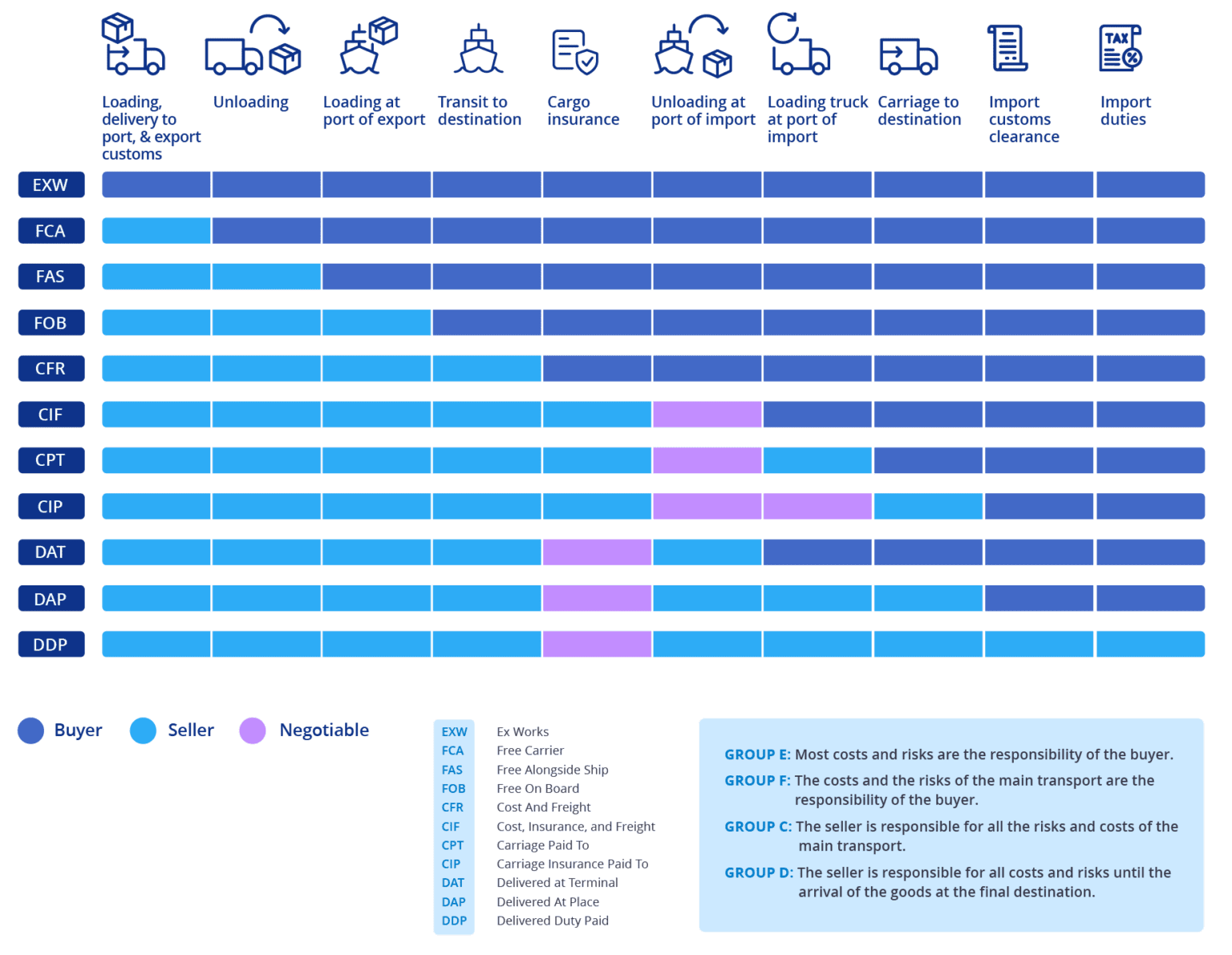
- EXW (Ex Works): The seller makes the goods available at their premises, and the buyer is responsible for all transportation costs and risks from that point onward.
- FOB (Free On Board): The seller is responsible for delivering the goods onto the vessel at the port of shipment. The buyer assumes responsibility once the goods are on board.
- CIF (Cost, Insurance, and Freight): The seller covers the cost of goods, insurance, and freight to the destination port. The buyer takes responsibility once the goods arrive at the destination port.
- DAP (Delivered at Place): The seller delivers the goods to a specified location in the buyer's country. The buyer is responsible for import duties and taxes.
- FAS (Free Alongside Ship): The seller delivers the goods alongside the vessel at the port of shipment. The buyer is responsible for loading the goods onto the vessel and all subsequent costs and risks.
- CFR (Cost and Freight): The seller covers the cost of goods and freight to the destination port, but the buyer assumes responsibility once the goods are on board at the origin port.
- CIP (Carriage and Insurance Paid To): Similar to CFR, but the seller also arranges and pays for insurance coverage for the goods during transit to the port of destination.
- DPU (Delivered at Place Unloaded): The seller is responsible for delivering the goods to a named place and unloading them. Risk transfers to the buyer once the goods are unloaded.
- FCA (Free Carrier): The seller is responsible for delivering the goods to the carrier at a named place, which is usually the terminal or a warehouse. Once the goods are handed over to the carrier, the risk transfers to the buyer.
- CPT (Carriage Paid To): The seller is responsible for the costs of transporting the goods to a named destination. Responsibility transfers to the buyer once the goods are delivered to the agreed-upon destination.
- DDP (Delivered Duty Paid): The seller is responsible for the entire shipment, including customs clearance and fees, and delivering the goods to the buyer’s premises. This incoterm places the maximum responsibility on the seller.
- DDU (Delivered Duty Unpaid): The seller delivers the goods to a named place in the buyer's country, but the buyer is responsible for import duties and taxes.