Home >>Shipping by Region >>Middle East >> UAE
Dubai announces Green Corridor with Oman for sea and air cargo shipments
What is the Dubai–Oman green corridor?
The green corridor is a dedicated logistics channel that connects sea and air transport networks between Dubai and Oman, allowing cargo to move seamlessly between ports and airports with minimal delays and reduced processing time. In practical terms, this means goods arriving by sea, particularly from Asia, can be quickly transferred to air cargo and flown to their final destinations, bypassing traditional bottlenecks.
In a significant development for regional trade, Dubai has announced the establishment of a Green Corridor with Oman to facilitate the seamless transit of sea and air cargo shipments. This initiative aims to enhance trade connectivity between the two countries while ensuring efficient customs procedures and expedited transit times.
The Green Corridor will allow for the smooth movement of goods between Dubai and Oman, providing a streamlined process for customs clearance and transit. The procedure is set to work seamlessly with transit declarations first being submitted in Oman, under fast customs procedures, before the shipment is transferred through the Green Corridor. This will enable businesses to benefit from reduced transit times and improved logistics efficiency.
Dubai's strategic location as a global trade hub, combined with Oman's position as a key gateway to the Arabian Peninsula, makes this Green Corridor a crucial development for enhancing trade relations and economic cooperation between the two nations. The initiative is expected to boost trade volumes, create new business opportunities, and strengthen the overall economic ties between Dubai and Oman.
Dubai's green corridor with Oman: A strategic trade advantage
Dubai has long positioned itself as a global logistics powerhouse, anchored by world-class infrastructure including Jebel Ali Port and Dubai International Airport, two of the busiest hubs in their respective categories. By linking with Oman, the UAE is expanding its reach and creating a regional logistics network rather than a single hub.
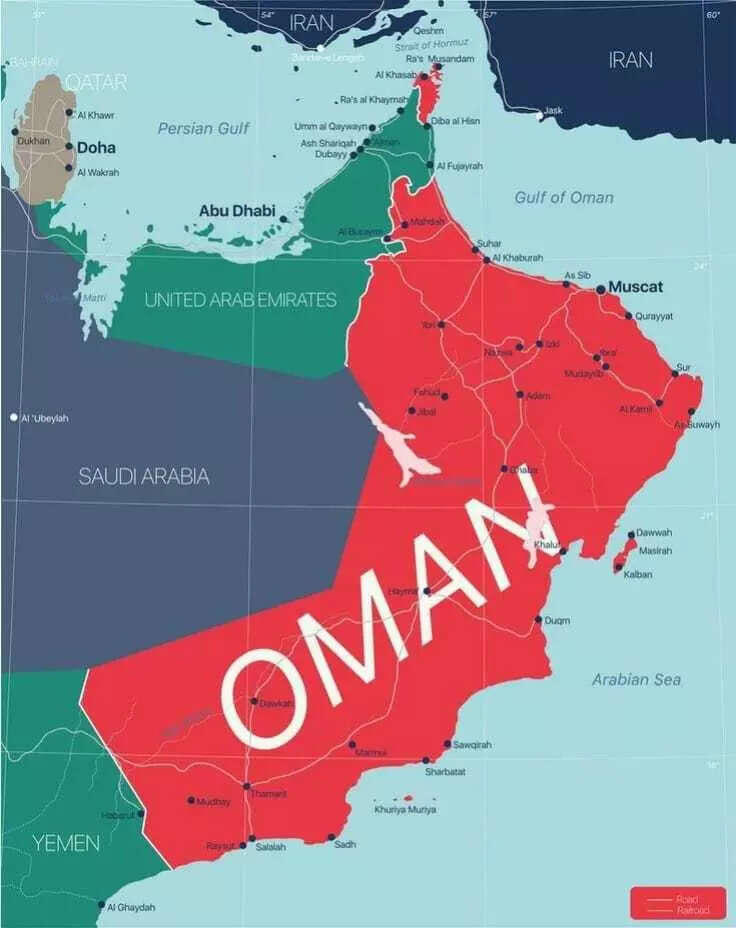
Oman’s ports, strategically located along key shipping routes, offer additional capacity and connectivity, allowing cargo to flow more efficiently into the UAE’s air freight ecosystem. Together, the two countries are building a system that can:
- Handle higher cargo volumes
- Reduce congestion at major ports
- Offer alternative routing options
This collaboration reflects a broader Gulf trend toward regional integration in trade and infrastructure.
Speed is the new currency for Dubai's green corridor with Oman
One of the biggest advantages of the green corridor is time. Traditional sea freight from Asia to Europe can take weeks. Air freight is faster but significantly more expensive. Sea-air corridors offer a hybrid solution, cutting transit times while keeping costs relatively manageable.
For industries where timing is critical, such as e-commerce, electronics, pharmaceuticals and perishable goods, this can be a game-changer. Faster delivery times mean:
- Reduced inventory costs
- Better customer satisfaction
- Greater competitiveness in global markets
In today’s economy, where consumers expect near-instant delivery, logistics speed has become a defining factor.
Dubai's green corridor with Oman is a boost for e-commerce and SMEs?
The ripple effects of this corridor extend beyond large corporations. Small and medium-sized enterprises (SMEs), as well as e-commerce businesses, stand to benefit significantly from faster and more reliable shipping options. With the rise of cross-border online shopping, demand for efficient logistics solutions has surged.
The green corridor enables businesses to:
- Reach international customers faster
- Manage inventory more effectively
- Compete with larger players
For Dubai, which is rapidly emerging as a regional e-commerce hub, this is a crucial development. Another key feature of the corridor is the emphasis on process efficiency. Traditionally, cargo moving between sea and air involves multiple checkpoints, paperwork and delays. The green corridor aims to eliminate these friction points through:
- Pre-clearance systems
- Digitised documentation
- Coordinated customs procedures
This not only speeds up movement but also reduces the risk of errors and delays. In an industry where time equals money, such efficiencies can have a significant economic impact.
Why it is called a “green” corridor between Dubai and Oman
The term “green corridor” is not just about speed, it also reflects a focus on sustainability and efficiency. By optimising routes and reducing idle time, the corridor can help:
- Lower fuel consumption
- Reduce carbon emissions
- Improve overall environmental performance
As sustainability becomes a priority for global businesses, logistics solutions that balance speed with environmental responsibility are gaining importance. The initiative represents a forward-thinking approach to logistics in a rapidly changing world. It strengthens regional ties as the collaboration between the UAE and Oman highlights growing economic integration in the Gulf. This is not just a regional story, the corridor has implications for international supply chains. Hybrid logistics models, digitalisation, and sustainability are all major industry trends.
The launch of the green corridor is part of a larger transformation in how goods move across the world. Traditional supply chains, linear, slow and rigid, are being replaced by dynamic, multi-modal networks that prioritise speed and adaptability. In this new landscape, geography matters less, connectivity matters more and efficiency is everything. Dubai’s latest move shows that the Gulf is not just adapting to these changes, it is actively shaping them.
The Dubai–Oman green corridor is more than a logistics initiative, it is a strategic leap forward in global trade connectivity with faster cargo movement, seamless sea-air integration and stronger regional cooperation. At a time when the world is rethinking supply chains, this corridor offers a glimpse into the future, one where goods move faster, smarter and more efficiently than ever before. As businesses race to keep up with rising demand and shifting global dynamics, the fastest routes will define the future of trade and Dubai is making sure it stays ahead of the curve.
Completed Shipping Solutions from China to the UAE During the Strait of Hormuz Crisis >>
