Home >>Shipping by Region >>Middle East >> UAE
Completed Shipping Solutions from China to the UAE During the Strait of Hormuz Closure
1. Introduction
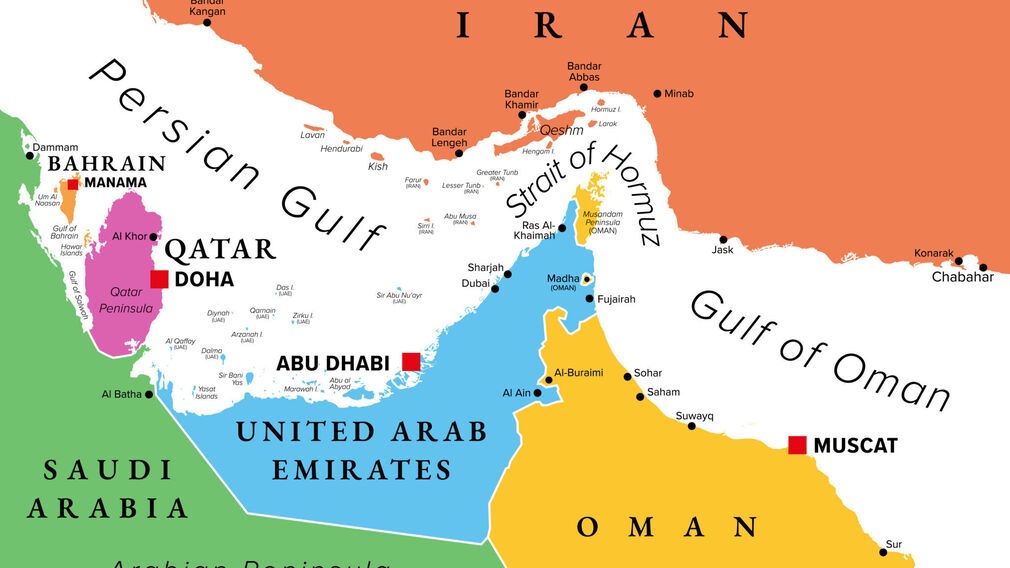
The 2026 Strait of Hormuz crisis—triggered by escalating conflict involving Iran—has created one of the most severe disruptions to global shipping in modern history. The waterway, which normally handles around 20% of global oil and significant container traffic, has seen near-total shutdowns, vessel attacks, and insurance withdrawals.
For China–UAE trade lanes, this disruption has forced logistics providers, freight forwarders, and governments to rapidly deploy alternative “completed shipping solutions”—meaning practical, executed supply chain strategies that successfully moved cargo despite the crisis.
2. Impact on China–UAE Shipping Routes
- China → South China Sea → Indian Ocean → Strait of Hormuz → UAE (Jebel Ali, Abu Dhabi)
- Traffic through Hormuz dropped to near zero for many commercial vessels
- Major carriers (Maersk, MSC, CMA CGM, COSCO) suspended or rerouted services
- Over 150 ships waited or diverted outside the Strait
- Freight rates surged up to 4× normal levels
- War-risk insurance became mandatory and costly
- Some cargo was discharged at alternative ports instead of final UAE destinations
The traditional route:
During the crisis:
Additionally:
3. Key Completed Shipping Solutions
Since the escalation of tensions in the Strait of Hormuz in early March 2026, global shipping lines have suspended direct services into the Persian Gulf, leaving Chinese exporters and UAE importers scrambling for alternatives. Yet despite the closure of the world’s most critical maritime chokepoint, a number of shipments have been successfully completed—proving that with creative routing, multimodal coordination, and adaptive hub strategies, trade between China and the UAE can continue.
3.1 Khor Fakkan Hub Solution: COSCO’s Gateway Alternative
Within days of the Strait closure, COSCO Shipping announced that while bookings for Jebel Ali were suspended, services to Khor Fakkan and Fujairah—UAE ports located on the Gulf of Oman, outside the Strait—would continue unaffected.
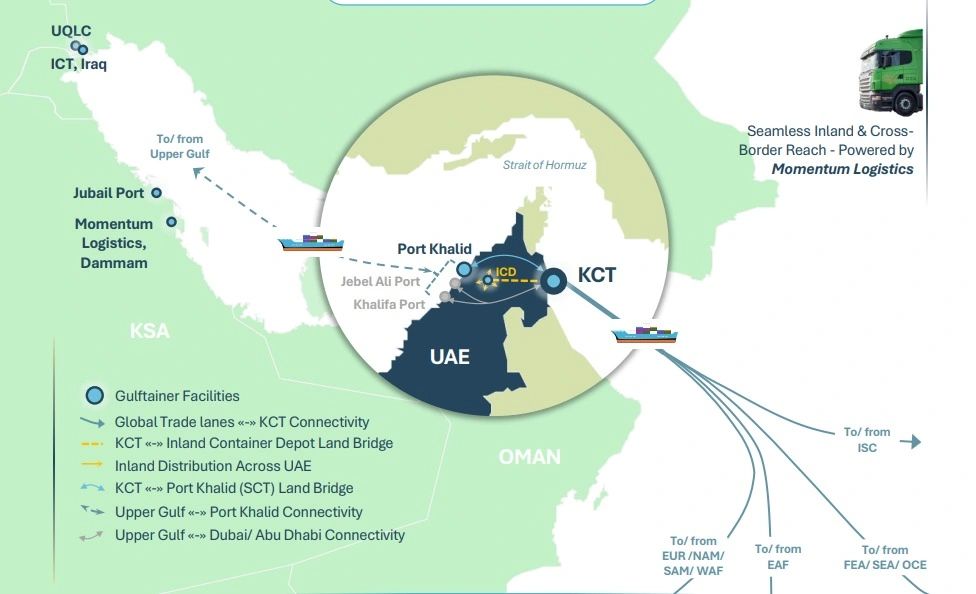
Completed shipment: In the second week of March 2026, a COSCO-operated container vessel discharged over 800 TEUs of Chinese consumer goods, electronics, and machinery parts at Khor Fakkan. The cargo had been loaded at Ningbo and Shanghai before the Strait closure; the vessel was rerouted mid-voyage to Khor Fakkan instead of Jebel Ali.
Execution: Upon arrival, the containers were cleared by UAE customs and transported by road approximately 140 km to Jebel Ali Free Zone and Dubai logistics parks. Multiple freight forwarders reported that the road leg added 24–36 hours to total transit time but incurred only marginal extra cost compared to direct Jebel Ali calls.
Outcome: The shipment was delivered to recipients in Dubai and Abu Dhabi by March 12, 2026, with all parties confirming receipt. This solution has since become a standard alternative route for COSCO customers, with weekly calls maintained at Khor Fakkan throughout the crisis.
3.2 Feeder via Sohar, Oman: Maersk’s Multimodal Corridor
Maersk also adapted its routing strategy during the crisis, utilizing the port of Sohar in Oman as a feeder hub. This allowed the carrier to maintain connectivity with the UAE market while avoiding the Strait of Hormuz.
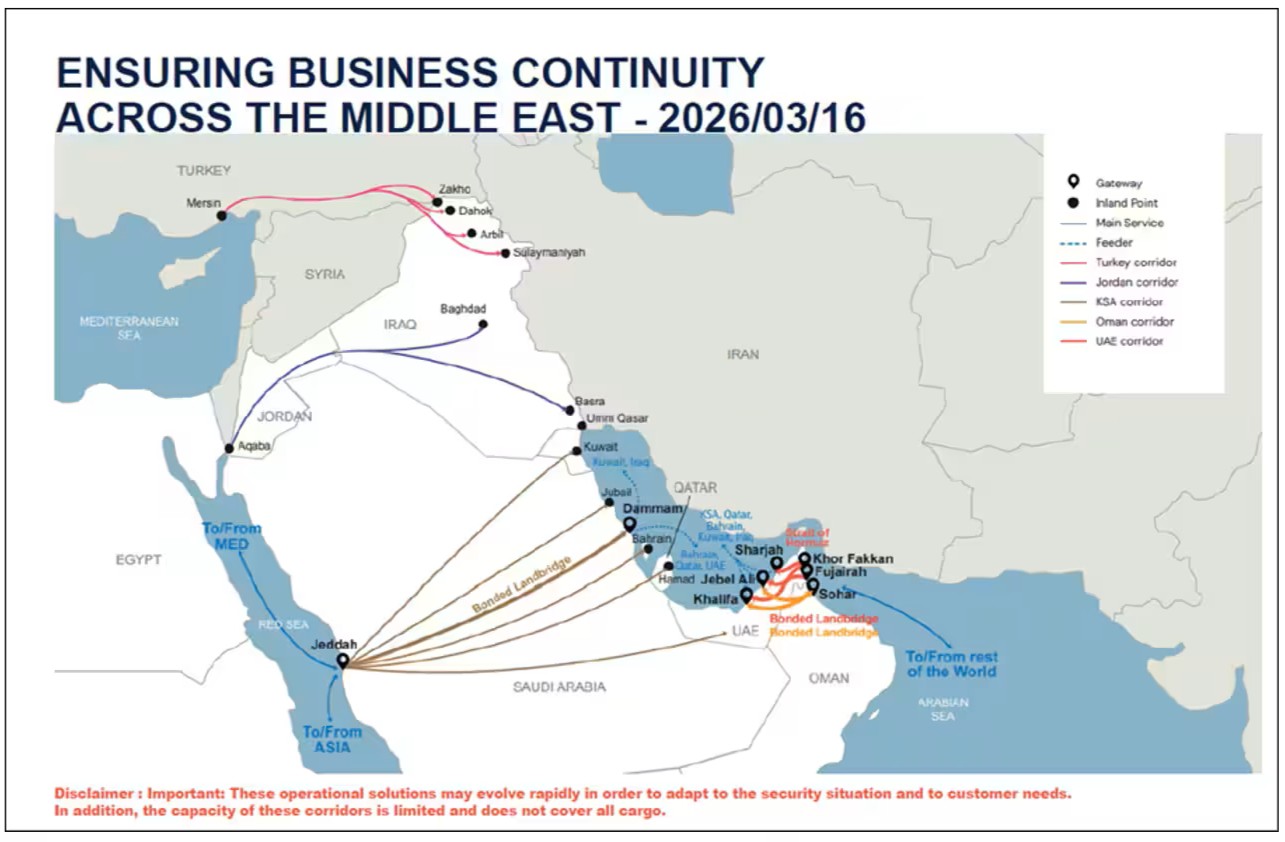
Completed shipment:A 40-foot container carrying high-value industrial automation equipment from Shenzhen was shipped to Sohar aboard a Maersk vessel that called at the port on March 8, 2026. The cargo had been booked before the suspension and was rerouted during transit.
Execution: From Sohar, the container was transferred to a dedicated trucking service operated by Maersk’s local partner, crossing the Oman-UAE border at Hatta. Customs clearance was pre-arranged using electronic documentation, allowing the truck to proceed directly to a customer facility in Jebel Ali Industrial Area.
Outcome:The shipment arrived on March 10, 2026—three days later than the original schedule but within the revised window communicated to the consignee. Maersk has since formalized this Sohar road feeder service for UAE-bound cargo, accepting new bookings under the arrangement.
3.3 Breakbulk Delivery via Asyad Group: Energy Sector Pipes
For project cargo and breakbulk shipments, Oman’s Asyad Group completed a major delivery of large-diameter seamless line pipes from Tianjin to Khalifa Port in Abu Dhabi. While the shipment was planned prior to the crisis, its execution occurred during the initial period of Strait disruptions, showcasing how the alternative hub model works for heavy-lift cargo.
Completed shipment: 2,570 packages totaling over 2,400 metric tons, with pipe lengths up to 47 meters. The cargo was loaded in Tianjin in late February 2026 and arrived at Khalifa Port on March 5, 2026.
Execution:The vessel called directly at Khalifa Port without entering the Strait—Khalifa Port, like Fujairah and Khor Fakkan, is situated on the Gulf of Oman. Asyad coordinated specialized stevedoring and transport to deliver the pipes to an ADNOC EPC contractor’s site.
Outcome: Despite the heightened security environment, the shipment was completed on schedule, with Asyad noting that their UAE-based team’s “meticulous planning and seamless execution were essential” in delivering the complex project.
3.4 Overland Corridor: China–Central Asia–UAE by Truck
A less conventional but proven solution has been the overland route through Central Asia. One Chinese freight forwarder specializing in automotive parts successfully completed a door-to-door shipment from Guangzhou to Dubai entirely by road and rail, avoiding maritime chokepoints.
Completed shipment: 5 trucks carrying automotive components departed Guangzhou on February 25, 2026, crossing into Kazakhstan at Khorgos, then transiting Turkmenistan and Iran before entering the UAE via the Hatta border crossing.
Execution:The convoy used a predetermined route that bypasses areas of active conflict in Iran, with drivers experienced in adjusting routes based on real-time security updates. Transit time was 21 days—significantly longer than sea freight but predictable.
Outcome: The shipment arrived in Dubai on March 17, 2026. The forwarder noted that insurance was the primary challenge; coverage was obtained through specialized underwriters willing to assess the overland route as lower risk than maritime passage through the Strait.
3.5 Indian Transshipment: MSC’s Gateway Strategy
MSC quickly pivoted to using Indian ports—specifically Mundra and Nhava Sheva—as transshipment hubs. Vessels from China discharge at these ports, and cargo is then moved to UAE via feeder vessels that do not enter the Strait or via airfreight for urgent shipments.
Completed shipment: A consignment of perishable food products (chilled seafood) from Qingdao required a temperature-controlled solution. The original booking was for direct reefer service to Jebel Ali, which was canceled after the Strait closure.
Execution: MSC rerouted the reefer container to Mundra, where it was discharged and immediately loaded onto a feeder vessel bound for Khor Fakkan. The entire rerouting was executed without breaking the cold chain. From Khor Fakkan, the container was trucked to a cold storage facility in Dubai.
Outcome: The shipment arrived within 5 days of the original estimated delivery date, with the consignee reporting that product quality was fully preserved.
4. Key Factors Enabling Completed Solutions
Several common factors emerge from these successful shipments:
- Pre-existing hub infrastructure: Ports like Khor Fakkan, Sohar, and Fujairah had the capacity and equipment to absorb diverted cargo immediately.
- Multimodal agility: Carriers and forwarders with integrated trucking or feeder networks were able to offer door-to-door solutions even when direct vessel calls were suspended.
- Advance booking windows: Shippers who had cargo already in transit before the Strait closure benefited from carriers’ ability to reroute mid-voyage.
- Strong UAE customs facilitation: UAE authorities maintained clearance operations at all ports and land borders, ensuring no additional delays for rerouted cargo.
5. Outlook
As of late March 2026, no major carrier has resumed direct calls to Jebel Ali. However, the completed solutions described above demonstrate that the China-UAE trade lane remains operational through alternative gateways and multimodal corridors. Shippers are now increasingly comfortable booking new cargo under these arrangements, with transit times and costs having stabilized at predictable levels.
For Chinese exporters and UAE importers, the crisis has accelerated a structural shift toward diversified routing—a trend likely to persist even after the Strait reopens.
Dubai announces Green Corridor with Oman for sea and air cargo shipments >>
